Resource Category: Product Type

AFO Decision Tool

To gain access, please complete the form below.

Frequently Asked Questions

What is the AFO Decision Tool?

The AFO Decision Tool is an interactive resource orthotists, therapists, and physicians can use to better understand how factors such as postural control, range of motion, spasticity, weight, and activity level can influence the optimal AFO design for individuals with varying ambulatory levels.

How does it work?

The sliders can be used to match the patient’s presentation to the corresponding description for postural control, range of motion, spasticity, weight, and activity level. Each category is weighted and will cause the slider for recommended AFO to change based on the responses. The descriptions on each slider category may change based on the selected ambulatory level.

A built-in video tutorial and walkthrough are available once you have registered and opened the program.

What about other factors that go into deciding orthotic treatment, such as patient goals, therapy goals, upcoming medical procedures, medications, changes in treatment, etc.?

Those factors are still important! As a healthcare provider, you should consider and weigh these factors into your assessment, in addition to those evaluated by the AFO Decision Tool. These include, but are not limited to, patient and family goals, treatment objectives, environmental factors, changes in medication, upcoming events, and more. In cases where the suggested AFO falls between two options, these other factors can be used to determine which design is optimal.

I am a seasoned provider – what benefits could I get from this tool?

Clinical experience provides invaluable insight into clinical care. This tool can be used as a starting point if you are training residents or new clinicians, to foster conversations with referrals about how these factors influence AFO design, or to verify your clinical recommendation. Remember, however, that there are multiple other factors that can influence your recommended AFO treatment.
Advanced AFO Order Form

Spring Flex AFO Order Form

PLS AFO Order Form

Night Stretching Strap AFO Order Form

Max Control SMO Order Form

Articulated AFO Order Form

Transforming Patient Care: Case Study of Printed Cranial Remolding Orthosis (CRO)

When Milo’s mom, Olivia, first raised concerns about her 7-month-old’s head shape, his pediatrician referred her to a local orthotist for a cranial remolding orthosis. After hearing about traditional and 3D printed options, Olivia felt confident in choosing Surestep’s new Sprout3DTM helmet due to its lightweight structure, single-sided hinge opening (making it easier for busy parents to open with only one hand), the perforated foam for better ventilation, and a plagiocephaly-specific trim line.

Summary

After being measured by his clinician, Milo’s helmet was fabricated with top-of-the-line 3D printing technology, allowing for a quick turnaround time and a precise fit – resulting in minimal modifications.

Milo’s helmet journey was a breeze for both Milo and mom, with Olivia saying, “When I took my son to his pediatrician, she couldn’t believe how easy it was to take the helmet on and off. The unique snap-on feature was probably the most raved about in my circle of friends and family.”

Throughout the helmet journey, Milo went through a couple growth spurts and received quick adjustments with minimal modifications – providing ease and comfort for both Milo and mom. Thanks to Sprout3D’s breathable features, Milo stayed cool despite his hot nature, and Olivia was able to easily clean the helmet.

Results

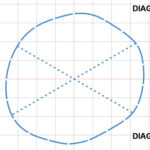
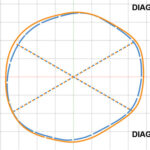
With his measurements moving from moderate severity to the normal range, Milo successfully “graduated” with flying colors after only two short months! Olivia states, “I would recommend Sprout3D to anyone who is considering a helmet for their child. I truly could not have asked for a better experience for my son.”

November 7, 2024

December 16, 2024

January 6, 2025

Open Heel FAQ

What is it?

The Open Heel Modification is a modification available on most of Surestep’s lower extremity products. Instead of the standard heel post, the plastic is cut away on the plantar surface of the heel. To reduce the risk of pinching and to maintain compression and calcaneal position, we have added a very thin molded inner boot.

Who is it for?

Children with low or high muscle tone (regardless of underlying diagnosis) who have anterior weight lines, sensory deficits and/or a fast transition from initial contact to footflat (including knee extension moment).

Does it still control the calcaneus, or pronation like the standard version?

Yes! We have compared Standard Surestep SMOs to Surestep SMOs with the open heel modification. There were no significant differences in the calcaneal position – both styles of SMOs controlled pronation. Because of Surestep’s unique plastic and utilization of compression, an SMO with the open heel modification can still correct excessive pronation.

Doesn’t it make the SMO bulkier?

Overall, no. Even though there is an extra layer of material, because it works through compression, the SMOs are nearly identical. We took a series of measurements of both a standard Surestep SMO with a heel post and a Surestep SMO with an open heel. Here’s what we found: At the metatarsals, or ball of the foot, the SMO with open heel was 1/16” wider. There was no difference in width at the malleoli (ankle bones) or in overall foot length. At the instep (measuring diagonal around the heel), the SMO with open heel was ¼” smaller.

Is it harder to get into shoes?

Slightly. There is a trick, though. Do not “push” the heel of the shoe on. Rather, use a big twisting motion to get started and over the “lip” of the plastic. Then, you should be able to push it on the rest of the way.

Does it actually make a difference?

Yes! We are seeing fantastic functional changes in our kiddos wearing Surestep SMOs, Toe Walking SMOs and AFOs with the open heel modification. Kids are now able to shift their weight more posteriorly, can squat more appropriately and are developing heel-toe gait patterns with more extension. We are slowing down the transition from initial contact to footflat, which also helps with posterior balance reactions and improved gait. We have also heard great feedback about the increased sensory input to the heel. Download PDF for examples.

What products does it apply to?

You can ask for the open heel modification on our SMOs, Toe Walking SMOs, Pullover AFOs, Advanced AFOs and Hinged AFOs. You can also ask for it on the SMO portion of any 2-Stage AFO.

Can it be applied to any level of support or control?

No, an Open Heel modification can only be applied to products that provide dynamic stability.

Sprout3D Graduation Certificate