
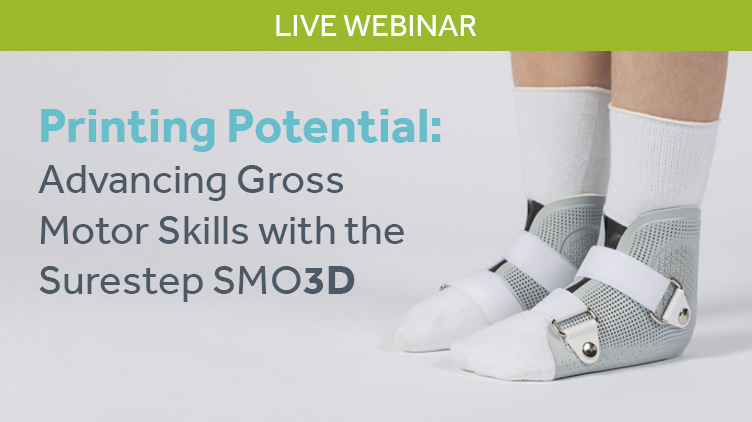
Printing Potential: Advancing Gross Motor Skills with the Surestep SMO3D
Date and Time
Location
Virtual Event
CEU: 1.25 Hours
Description: This live webinar introduces orthotists to Surestep’s latest innovation—the Surestep SMO3D. Building on 25 years of expertise and more than 2 million SMOs provided to children, Surestep has integrated its proven dynamic stability into a 3D‑printed design. With new structural features and a consistent, low‑profile fit, the Surestep SMO3D supports the development of gross motor skills while maintaining dynamic stability.
The course includes case studies of pre‑ambulatory and early ambulatory children, highlighting their progress with the Surestep SMO3D. Participants will also learn practical guidance on ordering, fitting, and educating families and healthcare teams about our new Surestep SMO3D.
Objectives:
Outline: (60-min including content and an additional 15 min quiz)
- Introduction (overview and objectives) (2 min)
- Case Studies, including content on
- Pediatric Development (8 min)
- Features of Surestep SMO3D (3 min)
- Pre-ambulator case study (13 min)
- Early ambulator case study (12 min)
- Parent and PT Feedback (2 min)
- Measuring and Fitting Tips (3 min)
- Ordering Surestep SMO3D (2 min)
- Parent & Caregiver Education (3 min)
- Conclusion (2 min)
- Q&A (10 min)
- Quiz (15 min)
Related Events
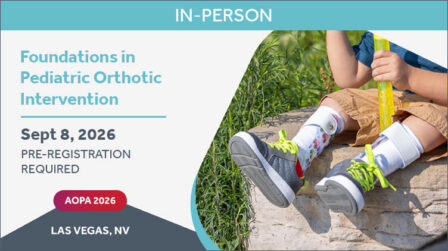
September 8, 2026
Foundations in Pediatric Orthotic Intervention
This course is designed for orthotists and therapists seeking to deepen their understanding of pediatric gross motor development and how orthotic intervention can facilitate development in children with delays and pathology.
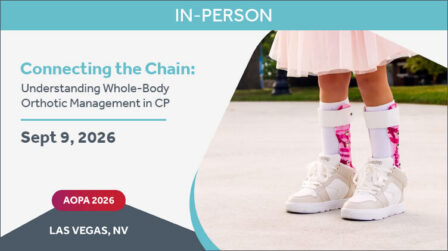
September 9, 2026
Connecting the Chain: Understanding Whole-Body Orthotic Management in CP
This course challenges the misconception that managing cerebral plays is only about lower extremities. Effective orthotic intervention requires understanding how the entire body develops and moves as an integrated system. This course reviews how cerebral palsy can impact pediatric development and how Surestep’s lower extremity and postural control solutions can create coordinated solutions to improve postural control, gait, proprioception, and active participation.