Hanger Institute Study Shows Strong Clinical Outcomes with Sprout3D
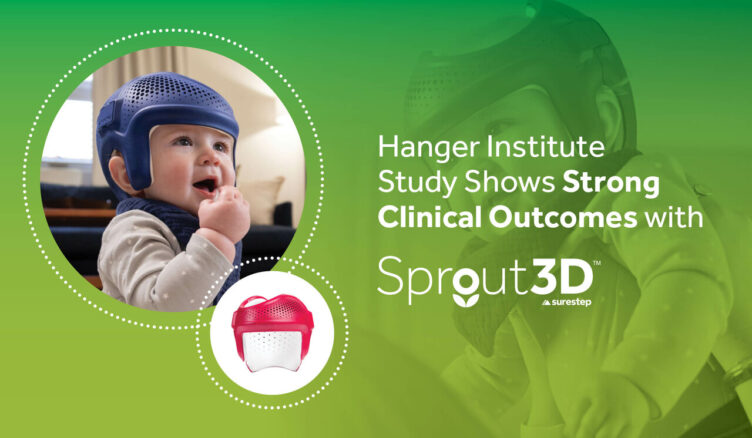
Since introducing Sprout3D™, we’ve heard encouraging feedback from clinicians and families alike—about fit, comfort, and overall treatment experience. Many have shared that they’re seeing strong clinical results in practice. Now, we’re excited to share data that helps quantify those observations.
A new outcomes study from the Hanger Institute for Clinical Research and Education examined the clinical effectiveness of Sprout3D compared to traditional thermoformed cranial remolding orthoses (CROs). Using real-world data from routine orthotic care, the study provides insight into how 3D-printed CROs perform when it comes to a key clinical measure: improvement in Cranial Vault Asymmetry Index (CVAI).
Study Overview
Researchers from the Hanger Institute reviewed outcomes from 1,140 infants treated for plagiocephaly. Among them, 228 infants received a 3D printed CRO (Sprout3D) and were matched to 912 infants treated with traditional thermoformed CROs.
Each Sprout3D case was matched with four thermoformed cases based on age at start of treatment, baseline asymmetry, head shape, sex, time since treatment initiation, and follow-up timing. The primary outcome was change in CVAI—a key clinical measure of symmetry improvement.
Results
The results showed that infants treated with Sprout3D had greater improvement in CVAI than those treated with traditional CROs:
- Infants treated with Sprout3D showed a reduction in CVAI from a mean of 7.67% at treatment initiation to 4.38% at follow-up—a 42.9% improvement.
- Infants treated with traditional thermoformed CROs improved from 7.63% to 5.17%, representing a 32.9% improvement.
- Infants in the Sprout3D cohort achieved significantly lower follow-up CVAI values than those treated with traditional CROs, reflecting an approximately 10% greater overall improvement in cranial asymmetry.
That means the Sprout3D group experienced clinically meaningful gains in symmetry compared with traditional fabrication methods.
Why it Matters
Sprout3D was designed to deliver a precise fit, ease of use, and comfort that encourages consistent wear. While these results are promising, this study does not indicate that one device is right for every patient. Clinical judgment and individualized care remain essential. But for clinicians exploring digital workflows or seeking evidence to support device selection, these findings offer compelling real-world data.
Read the full report here.