Surestep SMO Trimlines Explained
If you’ve fit a Surestep SMO, you’ve probably heard the question: “Are these on the wrong feet?”
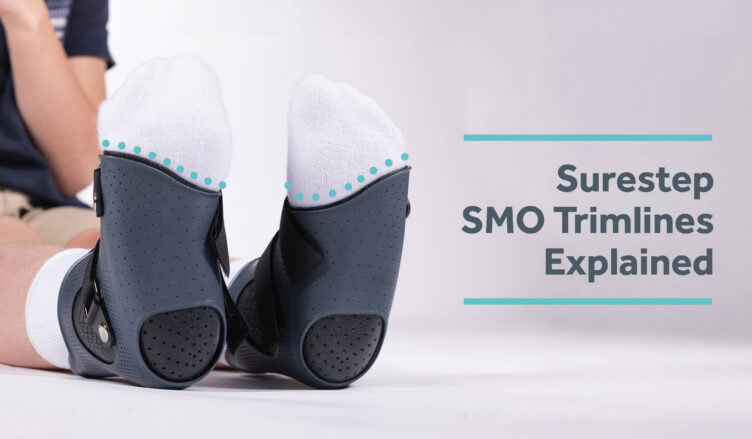
It’s an understandable reaction. The footplate runs longer on the lateral side and shorter on the medial side, while toes run the opposite way. That shape is intentional. Surestep trimlines are designed to protect one of the foot’s most important mechanisms for stability and propulsion: the windlass mechanism.
Let’s explore what excessive pronation does to the foot, how the windlass mechanism works, and how our trimlines support it.
What Happens in Pronation
Pronation is often called “flat feet,” but the arch is only one piece of the puzzle. Pronation is a chain reaction that starts at the heel:
- The calcaneus tilts inward into valgus.
- The medial longitudinal arch flattens.
- The forefoot abducts and toes push outward.
Viewed from behind, you see more of the lateral toes than expected. We call this the “too many toes sign,” and it’s a strong indicator of excessive pronation.
Some pronation is normal. The foot pronates to accept weight, and that’s how it adapts to the surface beneath it. The concern is excessive pronation, where the foot can’t recover from that position.
Because the problem starts at the heel, pushing the arch back up only addresses one symptom. Surestep SMOs address all three components. Circumferential compression guides the heel back into place, so large arch supports aren’t needed. The trimlines keep the forefoot in line with the rest of the foot.
How the Windlass Mechanism Works
The plantar fascia runs along the bottom of the foot, from the heel to the base of the toes. Its job changes depending on where the foot is in the gait cycle. When the foot bears weight, the plantar fascia relaxes. The midfoot joints are loose, so the foot can adjust to the ground it lands on.
When the foot pushes off, the big toe extends at the first MTP joint. This pulls the plantar fascia taut. The arch rises, and the midfoot joints lock together. The foot becomes a rigid lever.
This matters for two reasons:
- Arch development: Each time the windlass engages, it tensions the plantar fascia and raises the medial longitudinal arch under load. A child whose big toe can extend freely gets that arch-raising action with every step. This is especially valuable for children with excessive pronation.
- Energy-efficient gait: A locked midfoot gives the body a stable lever to push against. When the big toe can’t extend, the windlass doesn’t engage. The body then relies more on the calves, hip flexors, or other gait compensations to move forward.
How Surestep Trimlines Support the Windlass Mechanism
Surestep footplates are intentionally short. The medial trimline sits proximal to the first metatarsal head, so the big toe can extend, and the windlass can engage. The lateral trimline ends distal to the fifth metatarsal head, which helps reduce forefoot abduction in children with excessive pronation. With free toes, patients can make more contact with the ground, which means greater sensory input to support motor planning.
The result is a design that encourages a more propulsive, energy-efficient gait. It also supports the arch through the foot’s own mechanics.
What About Toe Walking?
Some SMO manufacturers block plantarflexion with a full footplate, which keeps children from rising onto their toes. Surestep takes a different approach with Toe Walking SMO and Toe Walking SMO3D. A posterior tongue gives a kinesthetic reminder to stay down, while the toes stay free. Children can still roll over the forefoot, work on gross motor skills that need some plantarflexion, and take in sensory input.
Easier Shoe Fitting
Because the standard Surestep footplate stops short of the toes, there is more room in the toe box, which can make shoe fitting far easier. The most common mistake caregivers make when shopping for adaptive shoes is buying two or more sizes too large, when what’s really needed is a wider shoe, not a longer one. For families looking for a starting point, Surestep shoes are made for SMOs and AFOs. Their wider and deeper design lets them slide on more easily and lets families choose the size that is true to the length of the foot. Our guide to shoes for SMOs and AFOs covers what to look for and may be a helpful resource for your patients’ parents and caregivers.