
Tag: Surestep SMOs

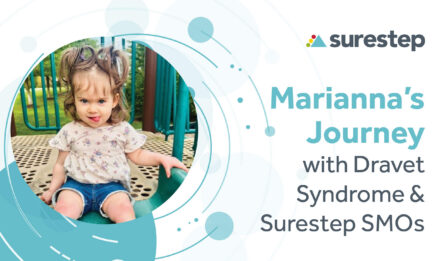
Marianna's Journey with Dravet Syndrome & Surestep SMOs

Marianna’s Journey with Dravet Syndrome & Surestep SMOs 

November is National Epilepsy Awareness Month, a time to raise awareness about the millions of individuals and families affected by epilepsy and seizure disorders. 

While epilepsy is often associated with seizures, some forms of the condition can affect much more than seizure activity alone. Dravet syndrome, a rare and severe form of epilepsy that begins in infancy, can also impact a child’s development, balance, coordination, and mobility. 

For the Watson family, those challenges have been part of their daughter Marianna’s journey from the very beginning. 

A Rare Epilepsy Diagnosis

Marianna was diagnosed with Dravet syndrome at just six months old. Caused by a mutation in the SCN1A gene, the condition causes much more than seizures alone. Children with Dravet syndrome can experience developmental delays, difficulties with coordination and balance, and mobility challenges as they grow.1

Despite the obstacles she’s faced, Marianna’s family describes her as a determined little girl who continues to surprise and inspire them.

To support her development, Marianna participates in physical, occupational, and speech therapies, each three times a week. Her therapists play a vital role in helping her build strength, coordination, and confidence as she develops new skills.

Finding the Right Support

As Marianna became more mobile, her family and care team wanted to provide additional support to help improve her stability and confidence. In late September 2026, she was fitted for Surestep SMOs. Since incorporating Surestep into her daily routine, her family has noticed meaningful changes. 

“She appears steadier on her feet, more comfortable exploring her surroundings, and increasingly willing to challenge herself physically,” said her mother, Candace.

Growing Confidence Through Everyday Moments

For Marianna’s family, the biggest changes have shown up in everyday activities. They’ve watched her confidently navigate the park, explore the playground, walk across different surfaces, and move through her environment with greater ease. They have also noticed improvements in activities that require stability and balance, such as squatting and returning to standing while she plays and explores. 

Her progress is the result of a collaborative effort involving her family, therapists, physicians, and other healthcare providers who support her development every step of the way. 

For her family, Surestep has become an important part of that team. 

Surestep has become one part of the team helping Marianna continue to move forward, alongside her therapists, physicians, and everyone who believes in her potential.

Candace, Marianna’s Mom

Having tools that support mobility and independence is especially meaningful for families navigating the uncertainty that often accompanies a complex medical diagnosis. 

During National Epilepsy Awareness Month, Marianna’s story serves as a reminder that the challenges extend beyond seizures. When children have supportive therapies, dedicated care teams, and mobility solutions like Surestep, they can build the stability and confidence that shape their overall wellness, development, and a brighter future.
Find a Provider

To find a provider near you who offers Surestep SMOs, please complete the form below.

find a provider

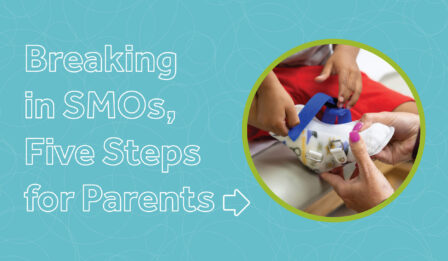
Breaking in SMOS, Five Steps for Parents

Making SMOs Part of Your Child’s Routine

Starting with SMOs can be a big change. Some days your child may slip them on without a fuss, and other days it might take a little more patience. That’s normal. With the right approach, SMOs can support your child’s growth while fitting naturally into your everyday rhythm. 

To help your little one along, here are steps you can take to help become more comfortable with wearing their Surestep SMOs. 

Step 1: Getting Comfortable with Braces

To start, focus on comfort rather than wear time. Braces can trigger a lot of emotions, and it is important to acknowledge them.  

One way to ease into the process is to ask your little one’s doctor, PT, or orthotist for a sample brace during the appointment. Let your child explore it, ask questions, touch the brace, and learn about its parts and purpose. 

Most importantly, connect the brace to your child’s goals. Whether it’s walking more steadily, playing with friends, or simply feeling secure, understanding how the brace supports those goals makes the process more meaningful. 

Step 2: Getting Used to the Braces

The next step is practice. Learn how to put them on correctly, starting with socks, then the brace, then shoes. Your kiddo’s orthotist should mark the straps to show the right tightness. Practice until it feels natural. 

Do not be afraid to ask for extra time at the orthotist’s office. Take the braces off and put them back on several times. Ask questions until you feel confident. This step is crucial because braces will become part of your child’s daily routine, just like shoes or jackets. Check out the video tutorial below to learn how to correctly don and doff your child’s Surestep SMOs.

Shoes are especially important. They need to fit well over the braces and hold everything securely. If they do not, ask the orthotist for guidance. Once you are home, keep practicing. Let grandparents, daycare workers, or anyone who helps care for your child try it too. The more comfortable everyone is, the smoother things will go.

Step 3: One Hour of Fun

Once you and your child are comfortable with putting on the braces, start small. Aim for one hour a day. During that time, make sure socks, braces, and shoes all feel secure, then let your child enjoy a favorite activity. At the end of the hour, take everything off and move on. If your child is ready later, you can add another session, but even one per day is enough to begin forming the habit. 

By keeping sessions short and positive, braces become part of their routine without feeling overwhelming. Habits take time to form, and every child will move at their own pace. 

Step 4: Extending Wear Over Time

Once shorter sessions feel natural, you can gradually extend them. Try two hours at a time, once per day. If your child is eager for more, add another session after a break. Remember, the focus is on comfort and success, not speed. 

Reminder: If your child resists wearing braces, do not assume it is just stubbornness. Discomfort can come from seams in socks, straps that are too tight, or braces that rub against the skin. Reach out to your child’s orthotist, doctor, or PT for help. They want your child to succeed and are happy to answer questions. 

Step 5: Moving Toward All-Day Wear

Over time, many children naturally transition to wearing braces throughout their active day. They may not even think about taking them off, except for naps, swimming, or when socks get sweaty. 

If your child still struggles, do not be discouraged. Keep focusing on shorter, positive sessions. Using braces even part of the day is far better than not using them at all. And if discomfort persists, consult your healthcare team to see what adjustments can be made. By focusing on comfort, practicing the basics, and building habits gradually, you will create a routine that helps integrate Surestep SMOs into your child’s development. 

Find SMO-Friendly Footwear

Support your child’s mobility without compromising style or comfort with Surestep’s range of orthotic-friendly shoes and socks.

shop footwear