

Tag: Cranial Helmet

New Study Shows Sprout3D™ Helps Improve Head Shape More Effectively

New Study Shows Sprout3D™ Helps Improve Head Shape More Effectively

If your baby has been diagnosed with plagiocephaly or brachycephaly, you may be exploring treatment options and wondering what really works. We know this can feel overwhelming, and that’s why we’re excited to share new research that helps answer an important question: How effective is Sprout3D™?

A recent outcomes study from the Hanger Institute for Clinical Research and Education looked at how well Sprout3D performs compared to traditional cranial helmets. For families considering this option, the results are encouraging. 

What Did the Study Look At?

Researchers reviewed real-world treatment data from 1,140 infants diagnosed with plagiocephaly who received cranial remolding orthoses as part of their routine care. Some babies were treated with Sprout3D, Surestep’s 3D-printed cranial helmet, while others were treated with traditional, thermoformed helmets.

To ensure the groups were comparable, babies were matched based on factors, including:

  • Age at the start of treatment 
  • How much asymmetry was present initially 
  • Head shape 
  • Sex 
  • Time since treatment began 
  • Timing of follow-up visits 

The researchers then looked at how much each baby’s head shape improved over time. 

The Results

The study found that babies treated with Sprout3D experienced greater improvement in head shape symmetry compared to those treated with traditional helmets. 

On average, babies using Sprout3D saw about 10% more correction in asymmetry when researchers accounted for factors like how severe the flattening was at the start, the baby’s age, and how long treatment lasted.1

How is Sprout3D Different?

Sprout3D is designed to deliver a precise fit without compromising your baby’s comfort. Because it’s created using advanced 3D-printing technology, each helmet is custom-made based on your baby’s unique head shape and measurements. It offers several features that make it easier to wear consistently:

  • 20% lighter than traditional cranial helmets 
  • Easy-to-use, single-side hinge opening 
  • Breathable, ventilated design 

What This Means for Families

Every baby is unique, and no single treatment option is right for everyone. Your clinician will always consider your child’s individual needs when recommending care. But for parents looking for evidence-based options, this research shows that Sprout3D is an effective option that may offer added benefits in improving head shape symmetry for some babies.  

If you’re considering cranial remolding treatment or want to learn more about Sprout3D, talk with your child’s clinician or request a list of Surestep providers. 

You can explore the full study results here. 

Find a Provider

To find a provider near you who offers Sprout3D, please complete the form below.

find a provider
  1. Carroll, K. M., et al. (2026). Comparison of CVAI correction between 3D printed and thermoplastic vacuum-formed cranial remolding orthoses [Abstract submitted for conference presentation]. 52nd Academy Annual Meeting & Scientific Symposium, American Academy of Orthotists & Prosthetists, Nashville, TN
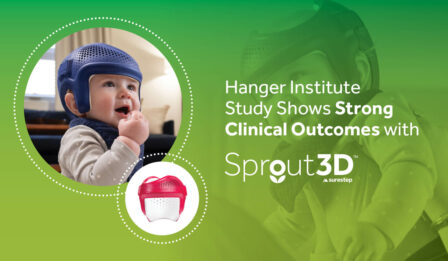
Hanger Institute Study Shows Strong Clinical Outcomes with Sprout3D 

Hanger Institute Study Shows Strong Clinical Outcomes with Sprout3D 

Since introducing Sprout3D™, we’ve heard encouraging feedback from clinicians and families alike—about fit, comfort, and overall treatment experience. Many have shared that they’re seeing strong clinical results in practice. Now, we’re excited to share data that helps quantify those observations.

A new outcomes study from the Hanger Institute for Clinical Research and Education examined the clinical effectiveness of Sprout3D compared to traditional thermoformed cranial remolding orthoses (CROs). Using real-world data from routine orthotic care, the study provides insight into how 3D-printed CROs perform when it comes to a key clinical measure: improvement in Cranial Vault Asymmetry Index (CVAI).

Study Overview

Researchers from the Hanger Institute reviewed outcomes from 1,140 infants treated for plagiocephaly. Among them, 228 infants received a 3D printed CRO (Sprout3D) and were matched to 912 infants treated with traditional thermoformed CROs. 

Each Sprout3D case was matched with four thermoformed cases based on age at start of treatment, baseline asymmetry, head shape, sex, time since treatment initiation, and follow-up timing. The primary outcome was change in CVAI—a key clinical measure of symmetry improvement. 

Results

The results showed that infants treated with Sprout3D had greater improvement in CVAI than those treated with traditional CROs: 

  • Infants treated with Sprout3D showed a reduction in CVAI from a mean of 7.67% at treatment initiation to 4.38% at follow-up—a 42.9% improvement.  
  • Infants treated with traditional thermoformed CROs improved from 7.63% to 5.17%, representing a 32.9% improvement. 
  • Infants in the Sprout3D cohort achieved significantly lower follow-up CVAI values than those treated with traditional CROs, reflecting an approximately 10% greater overall improvement in cranial asymmetry

That means the Sprout3D group experienced clinically meaningful gains in symmetry compared with traditional fabrication methods. 

Why it Matters

Sprout3D was designed to deliver a precise fit, ease of use, and comfort that encourages consistent wear. While these results are promising, this study does not indicate that one device is right for every patient. Clinical judgment and individualized care remain essential. But for clinicians exploring digital workflows or seeking evidence to support device selection, these findings offer compelling real-world data. 

Read the full report here.

Become a Sprout3D Provider

Interested in bringing Sprout3D to your patients? Sign up for our introductory course to get started.

register