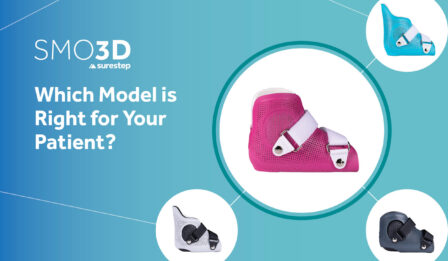
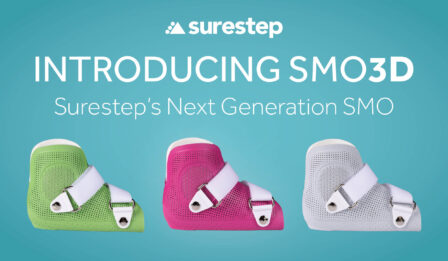
Surestep’s SMO3D family now includes three models, each designed for distinct patient needs. Which model is right for your patient? This quick guide is designed to help you decide.
SMO3D Standard
The standard SMO3D is a flexible, 3D-printed device with a dynamic stability support level. It can be fabricated from measurements, a cast, or a scan, and printed from PA 12 nylon.
It’s a strong fit for children with:
Excessive pronation
Triplanar instability in weight-bearing
Developmental delays in standing, walking, or gait development
Mild toe walking
Poor coordination or balance
Lack of proprioception
It’s less suited for children who need more control than an SMO provides, have a very bony foot, require plastic modifications to control adduction rather than abduction, or have moderate toe walking. For moderate toe walking, consider the Toe Walking SMO3D.
The Toe Walking SMO3D is designed for children with mild to moderate toe walking, particularly when sensory or stability concerns are present. Its extended posterior tongue gives kids a consistent physical cue for heel contact while still supporting natural movement requiring some plantarflexion.
It’s a strong fit for children who:
Spend more than half their time on their toes
Show excessive pronation
Have anterior weight lines without lateral weight shifts
It’s less suited for children who need an AFO due to postural control deficits, a full footplate, or can’t reach 90 degrees of foot dorsiflexion with knees extended.
Quick transitions from initial contact to footflat
Mild toe walking due to sensory deficits
Weak dorsiflexors
The plastic is cut away at the plantar heel, and a thin molded inner boot supports the foot. This allows for compression of the fat pad under the calcaneus, increasing sensory input at the heel and slowing down the transition between initial contact and footflat.
The TPU molded inner boot does add material, so it is less suited for children who prioritize a more low-profile option or who need more stability with an AFO.
SMO3D Toe Walking/Open Heel Combo
Have a patient who could benefit from both modifications? The SMO3D is also available in a Toe Walking/Open Heel combo. It combines increased sensory input at the heel with a kinesthetic reminder from the posterior tongue. This modification is great for kids with sensory deficits who toe walk 50-90% of the time
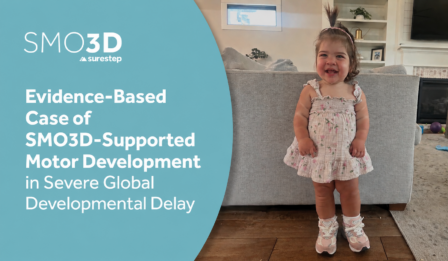
Olivia presented at 15 months corrected age with a diagnosis of severe global developmental delay and hypotonia, following a genetic finding of a variant of unknown significance in the SRRM2 gene. Born at 33 weeks, Olivia demonstrated delayed milestones consistent with her prematurity through the first year. However, by 15 months, her developmental trajectory suggested delays beyond those that could be explained by prematurity alone. A neurology referral confirmed severe global developmental delay and hypotonia as the underlying diagnosis.
At the time of orthotics evaluation, Olivia demonstrated significant motor limitations. She had not yet achieved independent standing, cruising, or climbing. Crawling was her primary mode of mobility, and she was demonstrating reluctance to practice standing or weight-bearing activities. While in assisted weight bearing, Olivia presented with excessive pronation, a common secondary finding in children with low muscle tone and altered motor control, with more pronation on right relative to left. She also presented with a wide base of support and external rotation of lower extremities with the right side more than left.
Clinical Presentation
From a movement perspective, Olivia’s hypotonia created a biomechanical challenge. With increased hypermobility, she lacked stability at her core and extremities, resulting in inefficient alignment and compensatory movements. Lack of typical movements can reduce proprioceptive input needed for motor planning. More critically, the lack of vertical weight-bearing practice meant she was not building the antigravity strength necessary for progression to standing and walking.
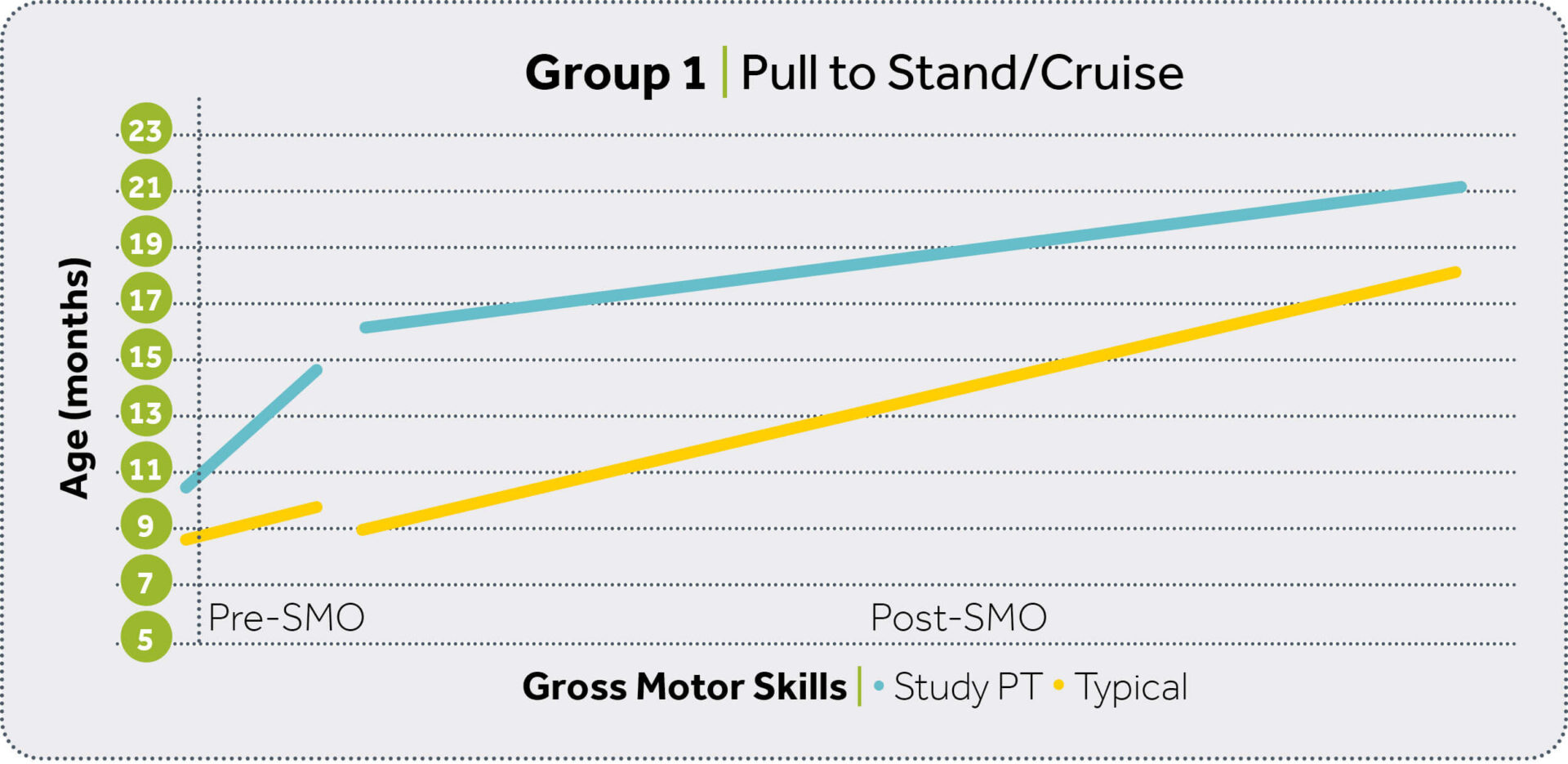
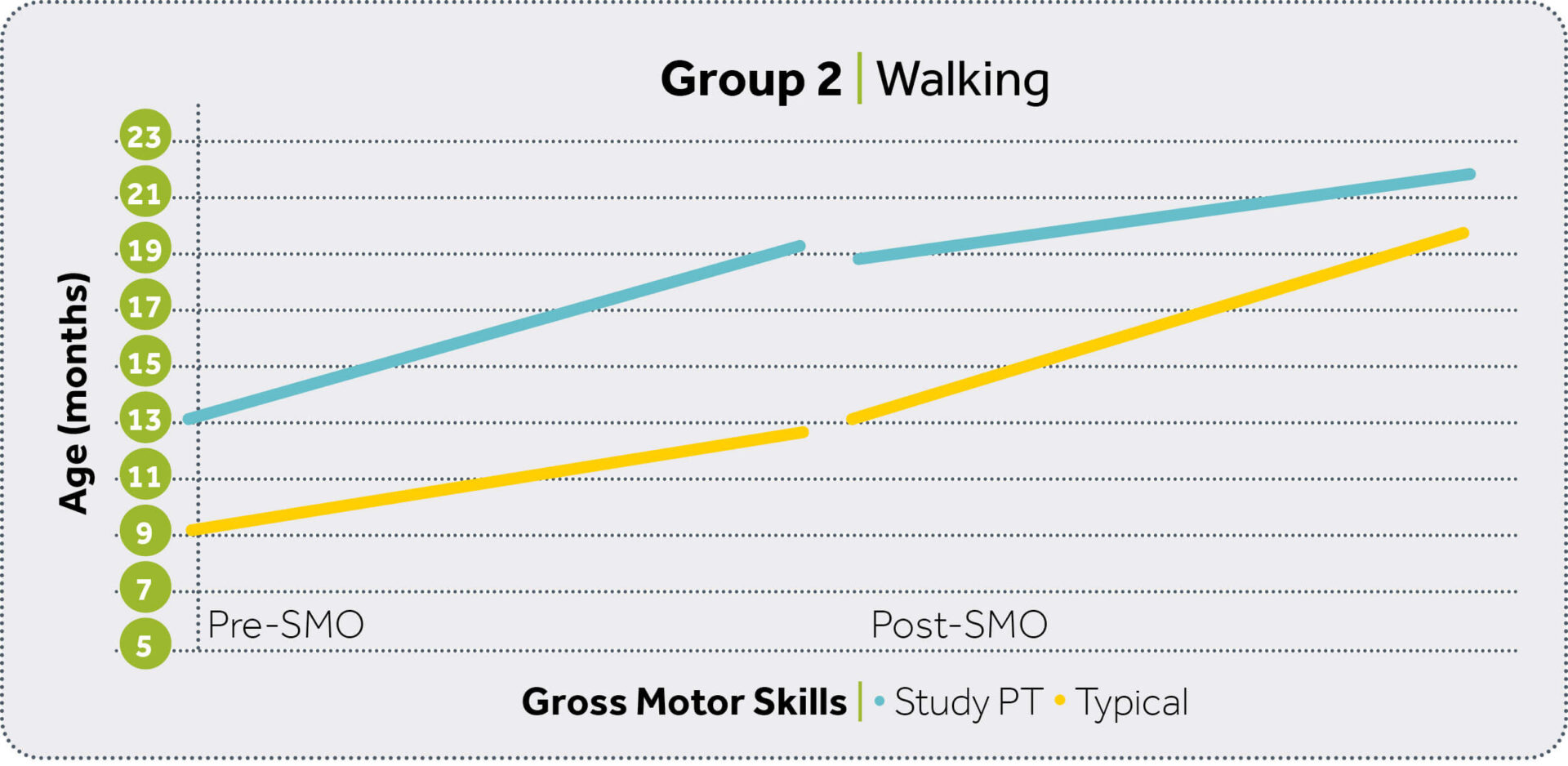
Olivia’s presentation fit the profile for dynamic SMO intervention. An earlier white paper by Smith, former director at Surestep, examining 18 children with developmental delay, benign hypotonia, and significant pronation, found that children wearing Surestep SMOs demonstrated dramatic acceleration in gross motor skill acquisition. Prior to orthotic intervention, children in the pulling-to-stand/cruising phase (similar to Olivia’s baseline) were acquiring skills one to four times slower than typical developmental rates. Following Surestep SMO fitting, this same group started to acquire gross motor skills more quickly than pre-intervention and worked towards catching up to their peers.
Comparison of the rates of gross motor skill gains of study participants to typical developing children pre and post receiving SMOs for both Group 1 (Pulling to Stand/Cruising) and Group 2 (Walking).
Many children with severe hypotonia will avoid standing if it requires excessive energy expenditure or feels unstable. This avoidance creates a cycle: without practice, strength does not develop; without strength, motivation to practice decreases. Olivia needed a tool that would reduce the biomechanical demand of standing so she could practice weight-bearing without fatigue or instability limiting her trial repetitions.
SMO3D with Postural Support Strategy
Olivia was initially fitted with bilateral standard Surestep SMOs paired with a reverse walker to create a graduated support strategy. The orthoses addressed her foot and ankle biomechanics while the walker provided antigravity support for the trunk and lower extremities during standing practice. With the standard SMOs in place, Olivia made significant progress. She developed the ability to pull herself upright independently, began steering the walker, and sought out vertical postures on her own. She continued working on standing balance, weight-shifting, and tolerance for sustained upright practice.
As Olivia grew and her motor skills advanced, she outgrew her initial orthoses. The clinical team recommended transitioning to the Surestep SMO3D to continue supporting her progression toward independent walking. The SMO3D, with the same dynamic, clinical approach as her initial standard Surestep SMO, offered several additional advantages aligned with her advancing needs: flexible structure over ankle bones for increased comfort, a narrower heel post to facilitate easier donning and doffing, and a perforated design to improve heat dissipation during increased activity.
By continuing to provide dynamic support and increased proprioception through compression, Olivia adapted to the SMO3D well and was able to continue to make progress toward her milestones. Over time with improved coordination and motor control, she has greater confidence being upright while the SMO3D continues to provide the segmental stability necessary for normal gait mechanics and peer participation.
Clinical Outcomes
The outcomes in Olivia’s case demonstrate the expected cascade when dynamic biomechanical support enables motor practice in a child with hypotonia.
As she started ambulating with the posterior walker more and transitioned to the SMO3D, several things happened simultaneously:
The asymmetry in her gait began to resolve. The pronation, which had been asymmetrically greater on the right foot, began to normalize as her body learned to work in a supported, aligned position. This mirrors findings in the Smith white paper, in which children with secondary gait asymmetries showed normalization after SMO fitting, suggesting the asymmetry was a motor-control problem responsive to postural support and practice, not a fixed structural issue.
Her standing tolerance increased. “She loves being vertical now,” her mother reports, indicating that standing shifted from being an effortful, avoided activity to something she sought out and enjoyed. This shift in motivation directly enabled the repetitive practice necessary for skill development.
At 27 months, Olivia has taken her first independent steps. More importantly, she is now engaging in play with her siblings in ways she was unable to before. She is chasing, exploring her environment, and participating in functional activities that naturally drive motor learning across multiple domains.
For Practitioners
When evaluating a young child with hypotonia who is avoiding or unable to sustain weight-bearing activity, consider whether external support might unlock the motor practice necessary for progression. The evidence is clear: children fitted with SMOs do not slow down developmentally; they accelerate. Olivia’s case is not exceptional. It is representative of what should be expected when we provide the right tool at the right time.
The SMO3D, combined with appropriate postural support tools, creates an environment where a child can sustainably practice being vertical. Over time, as the child’s strength increases, the demand on the device decreases naturally. This is orthotic management working as intended: scaffolding motor development, not replacing it.
Learn More About SMO3D
Interested in bringing SMO3D to your patients? Sign up for our introductory course to get started.
More than 25 years ago, Surestep redefined how clinicians support children with hypotonia by introducing a compression-based SMO that set a new standard of care. Built on a deep understanding of real-world clinical needs, the Surestep SMO became a trusted solution for children with hypotonia and pronation. Using extremely thin, flexible thermoplastic, the Surestep SMO’s innovative design compresses the foot’s soft tissues, stabilizing children while still allowing for natural development.
The Surestep SMO3D builds on that clinically trusted foundation, now re-imagined through modern 3D printing. Lightweight and flexible, this next-generation design provides the support needed to improve balance and coordination without restricting movement. Purposefully engineered to meet the needs of patients and practitioners, the SMO3D brings proven Surestep principles into a new era of orthotic care.
Innovative 3D-Printed Design
Advanced 3D printing enables precise fabrication and functional design features, including auxetic structures that flex and expand around the malleoli for added comfort, variable wall thickness for targeted support, and durable color-dyed materials that maintain their vibrancy.
Comfort that Encourages Wear
Lightweight, flexible materials and a perforated design offer breathability and freedom of movement. The low-profile silhouette and narrower heel post allow the SMO3D to fit into shoes more easily, supporting more consistent wear.
Clinically Trusted Results
Rooted in the same compression-based approach used in the fabrication of nearly 2 million SMOs worldwide, the SMO3D is designed to deliver results clinicians can rely on.
SMO3D Features & Benefits
Flexible: Auxetic structures built over the malleoli provide added flexibility over bony prominences
Shoe-friendly: Thin, smooth surface and narrow heel post allow the device to fit easily into most shoes
Targeted support: Custom wall thickness throughout the device provides stability without added bulk
Durable color: Dyed color that lasts through the duration of treatment
Lightweight: Designed to be a lightweight solution to improve patient comfort and compliance
Breathable: Perforated design throughout allows for a cooler, more comfortable fit
Reinforced rivet holes: Solid, non-perforated material around the rivet hole provides added strength and long-term durability
SMO3D Specs
3D Printed from PA12 Nylon Filament
Fabricated based on measurements, cast, or scan
Weight limit ≤ 50 lbs
Support Level: Dynamic Stability
Color Options: Light Gray, Dark Gray, Green, Teal, Pink
Join a Live Webinar (1.25 CEUs)
Ready to dive deeper? We invite you to join us for a live webinar session, Printing Potential: Advancing Gross Motor Skills with the Surestep SMO3D. This one-hour course will present case studies of pre-ambulatory and early ambulatory children, including their progress with the Surestep SMO3D. Additionally, we will cover best practices for ordering, fitting, and educating families and healthcare teams.
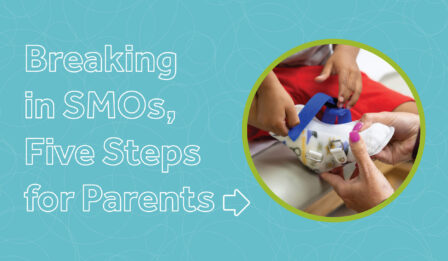
Starting with SMOs can be a big change. Some days your child may slip them on without a fuss, and other days it might take a little more patience. That’s normal. With the right approach, SMOs can support your child’s growth while fitting naturally into your everyday rhythm.
To help your little one along, here are steps you can take to help become more comfortable with wearing their Surestep SMOs.
Step 1: Getting Comfortable with Braces
To start, focus on comfort rather than wear time. Braces can trigger a lot of emotions, and it is important to acknowledge them.
One way to ease into the process is to ask your little one’s doctor, PT, or orthotist for a sample brace during the appointment. Let your child explore it, ask questions, touch the brace, and learn about its parts and purpose.
Most importantly, connect the brace to your child’s goals. Whether it’s walking more steadily, playing with friends, or simply feeling secure, understanding how the brace supports those goals makes the process more meaningful.
Step 2: Getting Used to the Braces
The next step is practice. Learn how to put them on correctly, starting with socks, then the brace, then shoes. Your kiddo’s orthotist should mark the straps to show the right tightness. Practice until it feels natural.
Do not be afraid to ask for extra time at the orthotist’s office. Take the braces off and put them back on several times. Ask questions until you feel confident. This step is crucial because braces will become part of your child’s daily routine, just like shoes or jackets. Check out the video tutorial below to learn how to correctly don and doff your child’s Surestep SMOs.
Shoes are especially important. They need to fit well over the braces and hold everything securely. If they do not, ask the orthotist for guidance. Once you are home, keep practicing. Let grandparents, daycare workers, or anyone who helps care for your child try it too. The more comfortable everyone is, the smoother things will go.
Step 3: One Hour of Fun
Once you and your child are comfortable with putting on the braces, start small. Aim for one hour a day. During that time, make sure socks, braces, and shoes all feel secure, then let your child enjoy a favorite activity. At the end of the hour, take everything off and move on. If your child is ready later, you can add another session, but even one per day is enough to begin forming the habit.
By keeping sessions short and positive, braces become part of their routine without feeling overwhelming. Habits take time to form, and every child will move at their own pace.
Step 4: Extending Wear Over Time
Once shorter sessions feel natural, you can gradually extend them. Try two hours at a time, once per day. If your child is eager for more, add another session after a break. Remember, the focus is on comfort and success, not speed.
Reminder: If your child resists wearing braces, do not assume it is just stubbornness. Discomfort can come from seams in socks, straps that are too tight, or braces that rub against the skin. Reach out to your child’s orthotist, doctor, or PT for help. They want your child to succeed and are happy to answer questions.
Step 5: Moving Toward All-Day Wear
Over time, many children naturally transition to wearing braces throughout their active day. They may not even think about taking them off, except for naps, swimming, or when socks get sweaty.
If your child still struggles, do not be discouraged. Keep focusing on shorter, positive sessions. Using braces even part of the day is far better than not using them at all. And if discomfort persists, consult your healthcare team to see what adjustments can be made. By focusing on comfort, practicing the basics, and building habits gradually, you will create a routine that helps integrate Surestep SMOs into your child’s development.
Find SMO-Friendly Footwear
Support your child’s mobility without compromising style or comfort with Surestep’s range of orthotic-friendly shoes and socks.
By subscribing I acknowledge that I would like to receive emails from ACP, which may include marketing communications regarding ACP products, services, and events. I can unsubscribe at any time.
ACP values your privacy. To learn more, visit our Privacy Statement.